
🚚 FREE U.S. Shipping on Orders Over $500
SKU: MOTS-c

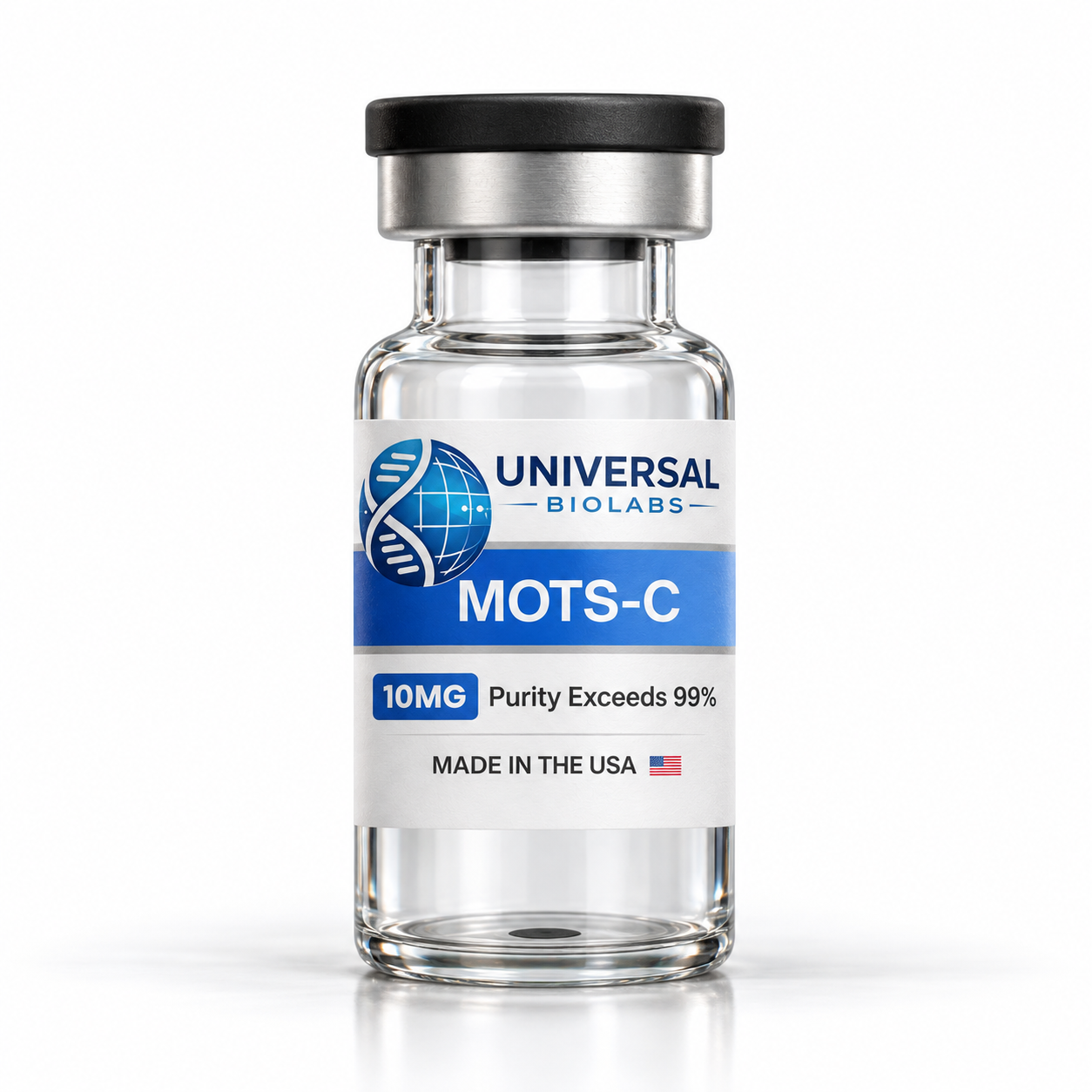
MOTS-c

MOTS-c is a 16-residue peptide, MRWQEMGYIFYPRKLR, encoded by a short open reading frame within the 12S rRNA region of the mitochondrial genome rather than the nuclear genome. It was first described in 2015, and this sequence is the reference form used across the published literature. The material supplied here is produced by solid-phase peptide synthesis.

It belongs to a small family of mitochondrially encoded peptides studied as retrograde signals, meaning published work examines how a mitochondrially encoded product influences nuclear gene expression rather than the reverse. This material is supplied as a characterized reference compound for non-clinical laboratory work, such as analytical method development for methionine-containing peptides, AMPK pathway assays in cell culture, one-carbon metabolism and folate cycle studies, and in vitro work on mitochondrial-to-nuclear signaling.

Compound Information

  • Sequence: MRWQEMGYIFYPRKLR
  • Molecular formula: C₁₀₁H₁₅₂N₂₈O₂₂S₂
  • Molecular weight : ~2174.6 g/mol (free base)
  • CAS number: 1627580-64-6
  • PubChem CID : 176489569
  • Physical form: Lyophilized white powder


Storage & Handling

Store lyophilized powder at −20 °C, protected from light. Avoid moisture and repeated freeze-thaw cycles. Handle in accordance with standard laboratory safety practices.

FOR RESEARCH USE ONLY. Not for human consumption. Not intended for human or veterinary use. For laboratory research and analytical purposes only.

Price range: $79.00 through $200.00

Choose Quantity

Description

MOTS-c is a 16-residue peptide, MRWQEMGYIFYPRKLR, encoded by a short open reading frame within the 12S rRNA region of the mitochondrial genome rather than the nuclear genome. It was first described in 2015, and this sequence is the reference form used across the published literature. The material supplied here is produced by solid-phase peptide synthesis.

It belongs to a small family of mitochondrially encoded peptides studied as retrograde signals, meaning published work examines how a mitochondrially encoded product influences nuclear gene expression rather than the reverse. This material is supplied as a characterized reference compound for non-clinical laboratory work, such as analytical method development for methionine-containing peptides, AMPK pathway assays in cell culture, one-carbon metabolism and folate cycle studies, and in vitro work on mitochondrial-to-nuclear signaling.

Compound Information

  • Sequence: MRWQEMGYIFYPRKLR
  • Molecular formula: C₁₀₁H₁₅₂N₂₈O₂₂S₂
  • Molecular weight : ~2174.6 g/mol (free base)
  • CAS number: 1627580-64-6
  • PubChem CID : 176489569
  • Physical form: Lyophilized white powder


Storage & Handling

Store lyophilized powder at −20 °C, protected from light. Avoid moisture and repeated freeze-thaw cycles. Handle in accordance with standard laboratory safety practices.

FOR RESEARCH USE ONLY. Not for human consumption. Not intended for human or veterinary use. For laboratory research and analytical purposes only.

Additional information

Weight 0.1 lbs
Dimensions 1 × 1 × 2 in
Size

10mg, 40mg

Disclaimer: For Research Purposes Only

This content is supplied exclusively for research and educational purposes. Nothing presented here should be interpreted as approval, promotion, or encouragement of any non-laboratory use, improper handling, or non-research application of peptides intended for scientific investigation. Any references to specific peptides, their properties, or findings associated with them are provided solely as informational research content. This information does not constitute legal advice, clinical guidance, or a recommendation for personal, therapeutic, or non-research use. These compounds are intended only for controlled scientific work conducted by qualified and authorized individuals. Before making any decision regarding the purchase, possession, handling, or use of research peptides, consultation with qualified research professionals or legal counsel is strongly advised. All information should be used responsibly, ethically, and only in connection with legitimate academic, scientific, or investigative purposes. This notice applies broadly to all peptide-related content provided here and may be updated as needed.

0