
🚚 FREE U.S. Shipping on Orders Over $500
SKU: Pinealon-20mg

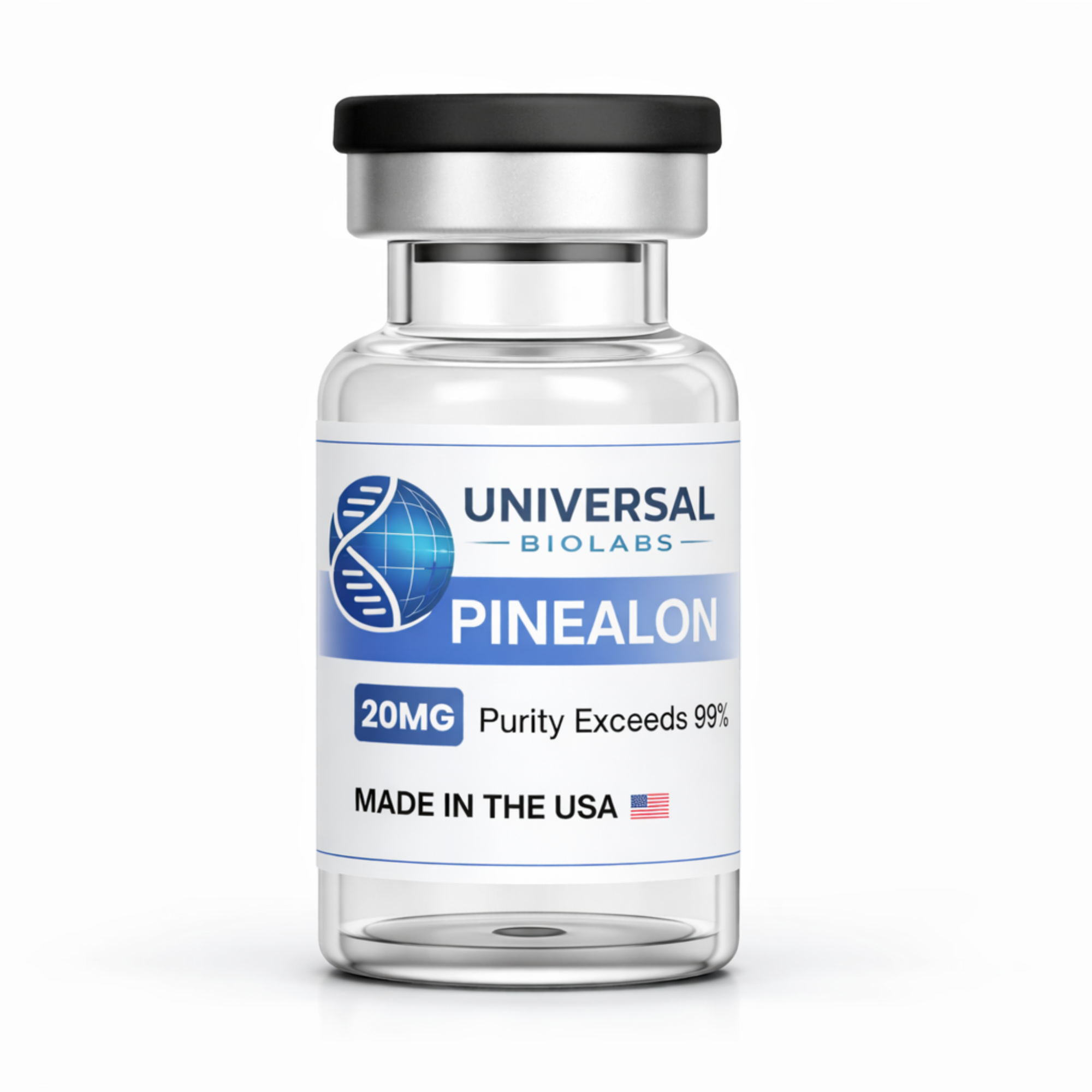
PINEALON (20mg)

Pinealon, also known as EDR, is a short synthetic tripeptide made from three amino acids, glutamic acid, aspartic acid, and arginine. It belongs to a class of small regulatory peptides studied for their potential effects on cellular signaling, gene expression, and nervous system research models. Because of its small size, Pinealon is often discussed in peptide bioregulation research, where researchers study how short amino acid sequences may influence specific cellular processes.

Research on Pinealon has mainly focused on neuronal cells, oxidative stress, and age-related cellular function. In laboratory studies, Pinealon has been investigated for its ability to influence reactive oxygen species, cellular viability, and gene expression patterns connected to neural tissue. Animal research has also explored Pinealon in models involving memory, learning, prenatal stress exposure, and cognitive function under experimental conditions.

Unlike stimulant-based compounds, Pinealon is typically researched as a regulatory peptide rather than an acute performance enhancer. Its main research interest is centered on how small peptides may interact with cellular systems involved in stress response, neural protection, and long-term cellular maintenance.

$65.00

Description

Pinealon, also known as EDR, is a short synthetic tripeptide made from three amino acids, glutamic acid, aspartic acid, and arginine. It belongs to a class of small regulatory peptides studied for their potential effects on cellular signaling, gene expression, and nervous system research models. Because of its small size, Pinealon is often discussed in peptide bioregulation research, where researchers study how short amino acid sequences may influence specific cellular processes.

Research on Pinealon has mainly focused on neuronal cells, oxidative stress, and age-related cellular function. In laboratory studies, Pinealon has been investigated for its ability to influence reactive oxygen species, cellular viability, and gene expression patterns connected to neural tissue. Animal research has also explored Pinealon in models involving memory, learning, prenatal stress exposure, and cognitive function under experimental conditions.

Unlike stimulant-based compounds, Pinealon is typically researched as a regulatory peptide rather than an acute performance enhancer. Its main research interest is centered on how small peptides may interact with cellular systems involved in stress response, neural protection, and long-term cellular maintenance.

Additional information

Weight 0.1 lbs
Dimensions 1 × 1 × 2 in

Scientific Reviewer

Scientifically reviewed by Dr. Julian H. Park, MD. Dr. Park serves as Scientific Reviewer for Universal BioLabs, helping uphold the accuracy, credibility, and scientific rigor of all technical content and research citations. He earned his medical degree from the University of California, Irvine School of Medicine and completed residency training in family medicine at Cedars-Sinai Medical Center. With more than 20 years of clinical experience, Dr. Park reviews research citations, study interpretations, and technical content for scientific accuracy.

Disclaimer: For Research Purposes Only

This content is supplied exclusively for research and educational purposes. Nothing presented here should be interpreted as approval, promotion, or encouragement of any non-laboratory use, improper handling, or non-research application of peptides intended for scientific investigation. Any references to specific peptides, their properties, or findings associated with them are provided solely as informational research content. They are not medical advice, legal advice, clinical guidance, or a recommendation for personal, therapeutic, or non-research use. These compounds are intended only for controlled scientific work conducted by qualified and authorized individuals. Before making any decision regarding the purchase, possession, handling, or use of research peptides, appropriate consultation with qualified research professionals, medical experts, or legal counsel is strongly advised. All information should be used responsibly, ethically, and only in connection with legitimate academic, scientific, or investigative purposes. This notice applies broadly to all peptide-related content provided here and may be updated as needed.

COA Preview
0